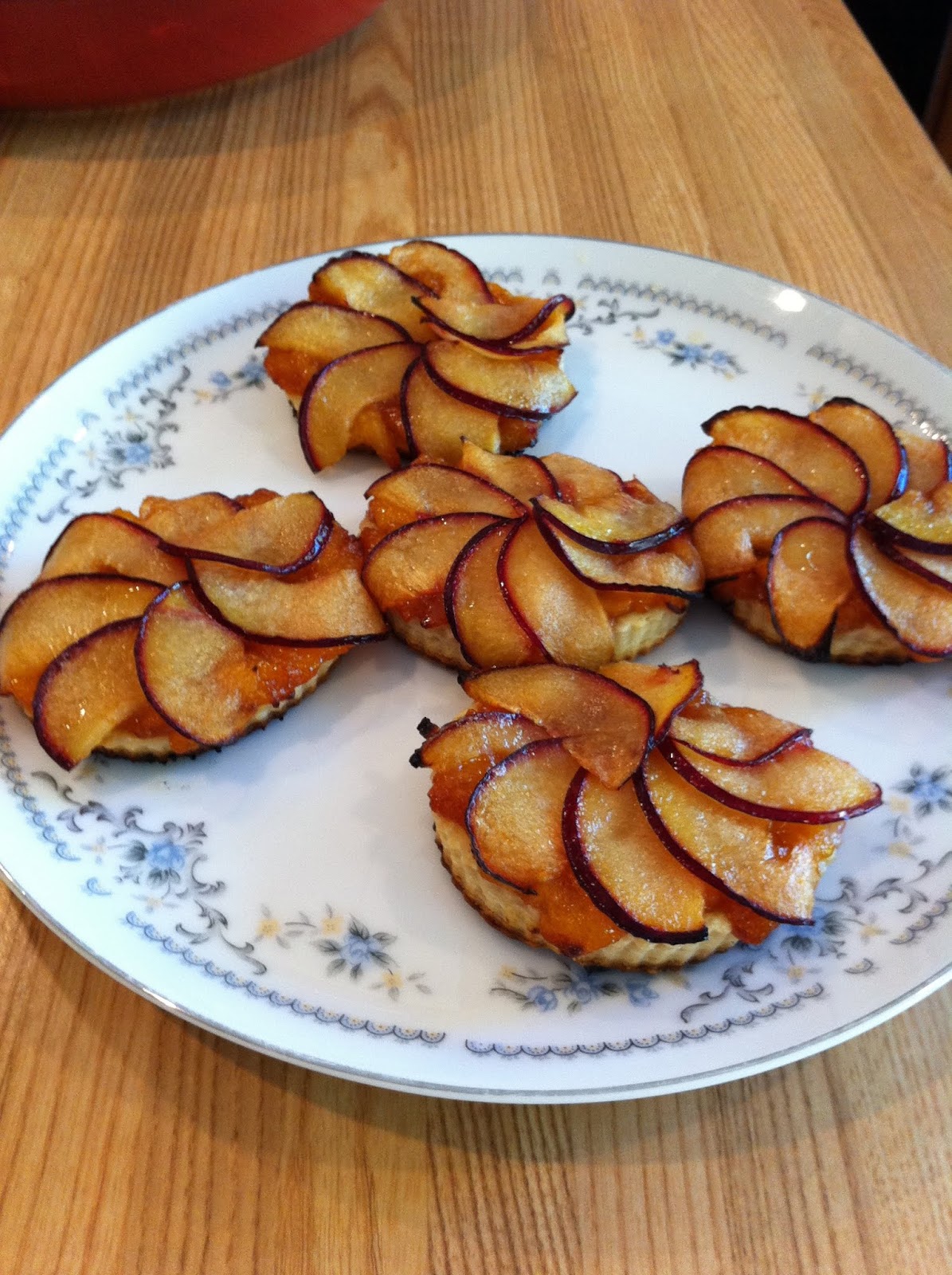
Sunday, November 7, 2010

Dry Creek Passport Weekend


View from the tasting room

I got my first taste of event cooking this weekend at my new winery job. It was a food and wine event for the 85 participating wineries in Northern Sonoma County. It was a novel event in that each winery showcased one small dish that best paired with one or more of their wines. The winery where I am employed owns 4 wineries with 2 of them in Sonoma County with each presenting a different dish. My location presented a pumpkin gnocchi with brussel sprouts cooked in a brown butter sage sauce with toasted walnuts which was paired with a Pinot. The gnocchi was prepared by the Chef and his assistants during the previous 2 days.
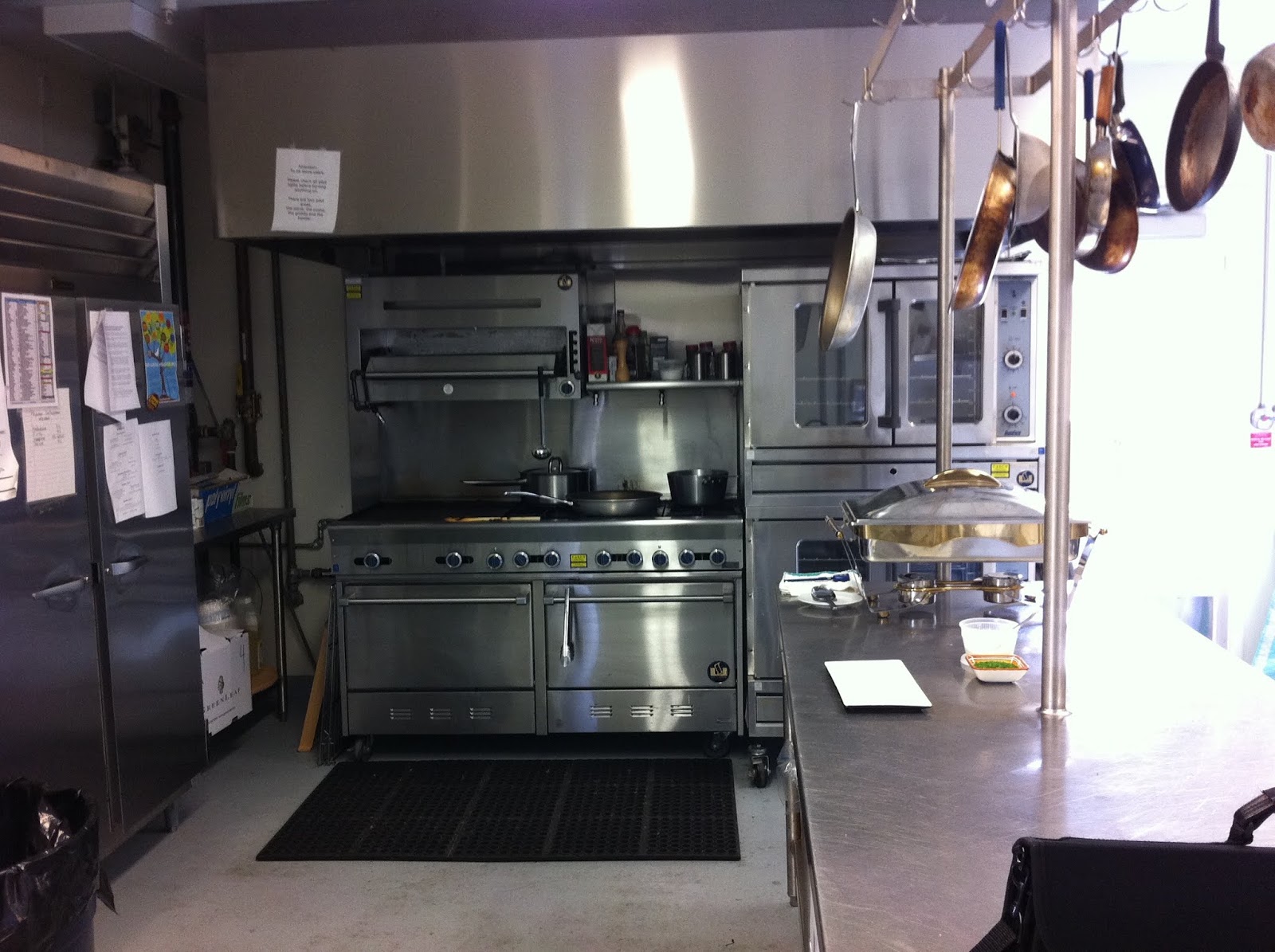
Arriving at the winery I was not sure what to expect or what my duties would be. We were a crew of 3 at this location. Our tasks were divided into 3 stations and throughout the day we rotated through each post to breakup the routine. One station was the front man who represented the food inside the tasting room to the public and answered questions regarding the dish, preparation, and general food questions. The front man also metered the food supply as the demand ebbed and flowed. The second station did the plating. The third station cooked the gnocchi at the stove.


What a change from the stress and pressure of working at the restaurant! I had a blast. When the dust had settled, we had served a total of 1500 people for the 2 days. I consider that a feat for 3 people, but there was no stress, no yelling, no Michelin star at stake! Not to imply that the product is inferior in quality, event cooking is just a different animal. At the restaurant, I am mostly involved with precision prep work and assemblage of mis en place with almost zero stove time. It was really nice to actually get to cook, not to mention having a more comprehensive role in the kitchen. I think I have fallen into the perfect niche. I receive regimented, precise education at the restaurant working with elegant products and presentation, and at the winery events I can employ what I have learned at the restaurant but in a more relaxed environment with a much longer leash.


Friday, November 5, 2010

What has the past 12 months meant?

It was a year ago when I left for Le Cordon Bleu on a much anticipated deviation from my life's course. In the past 12 months I completed the Basic Cuisine course, interned at a restaurant for 10 weeks, currently going to the same restaurant once per week as a part time intern, and have practiced intensely at home on most of my days off. This afternoon I made the appetizer to the right. It is gougère filled with chicken remoulade. It incorporated making choux pastry, mayonnaise, roasting some chicken, and balancing the use of fine herbs, acid, and seasoning. Maybe it's not so complicated, but a year ago I could not have made any component of this appetizer without a recipe, nor could I have come up with the concept of the final product. This was something I came up with this morning at the gym and whipped it together this afternoon without the aid of a recipe.  As I was making the dish, It dawned on me that the past 12 months have been really significant in terms of advancing my cooking skills. Since returning from Le Cordon Bleu, I have avoided using recipes and have attempted to combine ingredients using the tools I acquired in school (braising, poaching, roasting, etc..) I have liberated myself from the crutch of recipes. I now use them to gain ideas for techniques and food combinations, but the days of being tightly tethered to a recipe line-by-line may be behind me. I have also practiced and read a ton since my return from school. This is not to imply that everything I have made has been stellar. In fact I have had LOTS of disasters but each mistake led to a lesson learned. LCB gave me the tools and the confidence to try new things and helped shed the fear of failure. Finally, the internship has allowed me to see those basic techniques refined beyond anything I had imagined. The restaurant has also helped me with more creative plating ideas. Bottom line is that ALL of the above are responsible for where I am today. I have SO far to go. I may be only an inch along a mile long journey, but after putting this plate together, it feels so good.

Saturday, October 30, 2010

Kitchen Nomenclature and Situational Awareness

In the world of aviation there is a standard phrase "Situational Awareness"  (SA) that describes one's ability to be in a state of heightened awareness regarding one's surroundings. It is a critical trait for being a good pilot. Some of it is innate and some of it is acquired.  It can be applied to any mode of life like driving, walking on a busy street, etc...As an example, someone who is driving while texting does not have good situational awareness and will most likely not respond adequately to an unexpected event. SA has a huge application in the kitchen as well. I pride myself on having a good SA while flying, in my home kitchen and generally while performing any task, but I just can't seem to have one in the professional kitchen.

It seems that as soon as I step in the kitchen, I become a fumbling clumsy oaf. I know what the problem is, but I can't help but get frustrated at myself. It really has to do with many things such as being unfamiliar with all that's going on in the kitchen around me, unfamiliarity with the equipment, and not knowing all the terminology and lingo of the kitchen. Typically when in a new environment, one's SA is seen through a tunnel and it slowly expands as one becomes more knowledgeable and comfortable with the surroundings. My kitchen SA is definitely a narrow tunnel because so many things in a professional kitchen were never taught in Culinary school and are acquired only through experience- sometimes the hard way!

Last night I went to the restaurant and I decided to take care of one the mysteries of the kitchen terminology. What is a 9 pan, 6 pan, 3 pan, 2 pan etc...I had figured out by watching what a 9 pan is, but I had been too embarrassed to ask about the others. I had simply never acquired their names nor did anyone teach me when I started in internship. I had looked online, but no luck.  Finally I swallowed my pride and asked to get it all sorted out. It has nothing to do with quantity in qts, or length in inches...it's how many pans fit on a large sheet tray. You can fit nine "9 pans" on a large sheet tray, six "6 pans" on a sheet tray, etc. They are actually called 1/9th pan, 1/6th pan, etc...but are shortened to 9 pan, 6 pan, etc...

I got the pans sorted out. Maybe my SA will now improve by .01%. During service I stood at the line, ready to assist when needed. "Mark, can you run and get me the swiss chard from the 6th drawer" the Sous Chef yelled across the line. "Yes Chef" as my legs began to move toward the natural food storage area (the walk-in), my brain was asking where the hell is the "6th drawer"??? I had to run back to the line for clarification. As I turned the corner, the Sous said "the SIX DOOR". I must have looked confused. The "SIX DOOR right next to you". OK, I get it now. There is a fridge at the Garde Manger station that has 6 doors on it.  I just didn't know it was called the "six door". Damn I felt like an idiot, but my SA just increased by another .01%. Great I only have another 99.98% before I can feel as comfortable in the kitchen as I do in a 757.

Back at the line I was ready to retrieve any size pan and could nail any request to get something out of the 6 door. The meat cook yells "Mark run back to the walk-in and get me 15 from the Sail kid in a 1/3 pan". I reply "Sail kid"? Yes "sail kid" was his response as he was deep in the middle of juggling about 25 pieces of meat on his grill. OK, I am going to figure this one out as I ran to the walk-in looking for this sail kid. Is this a name for some variety of fish that I don't know. My forehead is sweating and I feel very hot despite the fact that I am standing inside a fridge. Did he say "scallop" and I just misheard him. "Sail kid..scallop".."sail kid..scallop". The more I say it, the more they begin to sound like one another. At least I'll get the correct pan now that I know what a 1/3 pan is. No time to waste, so I grab 15 scallops and run back through the mine field of the line and hand them to the meat cook in a beautiful 1/3 pan. He looked at me like I am crazy. He ran to the walk-in with me in tow and showed me the "Sole Kit". A tray with sole filets on it. Why didn't he just ask for sole? Damn, well add another .01% to the SA pile.

I drove home feeling very frustrated. It really comes down to time. Time spent in the kitchen. Seeing, hearing, doing. and making mistakes are all essential component of learning. As a perfectionist, it's painful for me to make silly mistakes, feel clumsy, or be disoriented. I have to believe that we all begin at this level and improve with time. Lesson learned: swallow my pride, develop a thick skin and put in the time. It's the only way!

Saturday, October 23, 2010

New Friends, Italian Bounty, and Roasted Tomatoes

I was fortunate enough to see some new friends last night who had me to their home for a great dinner. After a delightful dinner and lots of great wine and conversation, the end of the night was nearing. Earlier, the host had asked me if I would want to have some heirloom tomatoes from their garden. As my friend Sjoerd says when I ask him if he wants another beer, "Is the Pope Catholic?" I didn't exactly say that, but I politely responded with a "that would be great". As it was nearing the time to say goodnight, I thought the subject had been forgotten, but next thing I see is the host rummaging about in his garden with a flashlight (it's after midnight) selecting an assortment of choice tomatoes and peppers for me. This generous act is an indication of what kind of evening we had experienced.

After taking the goods out of the bag and rinsing them this morning I realized that the bulk of the tomatoes are the prized San Marzano tomatoes from Naples which are reserved for making the best Italian sauces. My new friends are of Italian heritage so it makes sense that they would grow this variety. As I stared at the tomatoes over my morning espresso I was tossing around ideas of how I could honor these tomatoes and their heritage. Sauce was an obvious choice, but I wanted to do something different. So I decided to roast them in a way that they could be used in a multitude of future dishes. The process of roasting creates not only the tomatoes, but also its juices which are drained off periodically during the roasting and reserved. Both the tomatoes and the juices are then separately frozen. Here are some great ideas:

-use the juices to make a tomato vinaigrette
-juices can be incorporated in a risotto
-uses the juice in addition to a sauce to add a rich tomato flavor
-use the juice to add coloration and flavor to pasta dough
-roasted tomatoes can be incorporated with a vegetable ragout
-tomatoes can be served mixed with risotto
-toss the tomatoes in a linguini mix with oil, garlic, and herbs
-puree the tomatoes for an accent sauce or plating decoration

The ideas are endless with this versatile product.

Here is how I roasted them:

Preheat oven to 350

1. Core and cut the tomatoes lengthwise.
2. Place in a roasting pan lined with parchment paper cut side down and drizzle with olive oil, crushed garlic, thyme, rosemary, and salt & pepper


3. Roast until the skins can be easily be removed by sliding it off the flesh (approx 20 mins)


4. Drain the juices off and reserve
5. Lower oven to 275 and return pan to oven
6. continue baking until the tomatoes have reduced and almost dried while periodically draining and reserving the juices (1-3 hours depending the size of the tomatoes)
7. You can take an extra step and extract the real delicious juices/pulp out of the skins by running them though a food mill and add to the reserved juices.


7. portion the juice and tomatoes separately and freeze for 6 months or use within a week.

Thanks Joe and Jann for the great tomatoes!


Thursday, October 21, 2010

Back to the Restaurant

It's been almost 4 months since I have worked at the restaurant. I wasn't sure if I would feel welcomed because I had left so abruptly after a 10 week internship. During the past few months, I have felt a brewing desire to return. In some ways I was disappointed with myself because I felt that I had somehow given up on professional cooking (not a usual tactic for me). I missed the feel of a professional kitchen and I missed the people. Most importantly, I missed learning. The restaurant has a crew of very talented chefs who had all taken time to teach me each in his own style. It was a rewarding 10 weeks.

I went in today with a few butterflies in my stomach. It was a big night at the restaurant because it was hosting a special wine event in addition to regular service. I had studied the event menu before going in to know every angle of each dish. I wanted to be prepared mentally even though I knew that I would be out of "kitchen-shape" physically. No amount of home cooking can be enough preparation for the physical demands of the professional kitchen. I walked in and was greeted with lots of warmth and smiles. Pheww...


I dove right in. The Chef employed me to help with the special event preparation in addition to helping everyone a little with their mise en place. This is an amuse bouche that I made for the event. It was simple to make but looked so nice when it was plated. I loved the colors. It tasted great too. I'll keep the ingredients a mystery to protect the restaurant's secrets! (Not that you can't figure it out by just looking at the picture).


I also made portions of and assembled the Cheese plates pictured below for the event. It was composed of a black pepper short bread which I made with a fig marmalade canelle, and reduced Syrah sauce. I think this event was an excellent preview for my upcoming winery job.


All in all it was fantastic to be back. The Chef was patient with his instruction. They guys were the same. There were a couple of new faces who kept their distance, but all in all a great night. My body felt it..my back, feet, hands are very sore. My knife skills have waned quite a bit and my speed is gone. I guess it's like any thing where proficiency requires practice.

Monday, October 18, 2010

Cooking News!!


We received a dinner invitation to a friend's house and I was tasked to bring an appetizer. I dug this one out from the cobwebs of my internship a few months ago. The restaurant used a salmon variation of this for an amuse bouche. It's simple, easily adjusted to individual taste, and employs a a couple of interesting techniques (making torchons using saran wrap). I made it using a chicken breast that I threw into my short rib braising liquid yesterday. I also added some golden raisins steeped in port and red wine. It also includes butter, chives, celery, and tarragon served on a toasted brioche disk.


Chicken rillette on brioche

Now to the news...The big news for me came in the form of an email from a Chef in Napa yesterday. I have been hired by him and the winery to cook for special events. By cook, I probably mean prep, given my almost non-existent kitchen experience. This may be the avenue that could work for me- a way to cook professionally to feed my passion and also maintain my flying job to feed the bank. I have also contacted the Chef from the Michelin restaurant where I did my internship and have been granted the ability to come back for more training. I plan to go in to the restaurant one day per week just to continue my growth under quality mentorship. It's hard to say "no" to such an education right here in my back yard. Incidentally, both the winery Chef and my internship Chef are CIA grads. One cooks in a classic French style and one in a style which incorporates the classic French techniques to create Italian dishes. I am loving life! This broad base of knowledge is a dream.

My first event will be November 6-7. 

Thursday, October 14, 2010

Dutch Chef in Sonoma (Sjoerd LCB Classmate)

What could be better than having your own private chef fly in from Amsterdam and serve you a meal? My buddy Sjoerd and his wife Jayne came for a visit to the wine country and brought their enthusiasm and positive energy not to mention their combined culinary skills. It was a great visit filled with culinary adventures.

Pictured here, the Chef is plating a salmon and roasted fall vegetables for a simple and delicious lunch at my house.

We took a drive through Napa Valley on day one where I had

arranged for a tour of the French Laundry kitchen. We arrived at noon right in the middle of prep. The kitchen was remarkably small but VERY clean and organized and was intensely silent. Interestingly, there is a flat screen TV in the kitchen with a live feed of the kitchen at Per Se in NYC.  Following the tour, to keep the TK theme going, we went to Bouchon for lunch. Excellent!

Our next destination was one of the premiere Napa valley
wineries where we got a nice behind the scenes tour of the grape de-stemming, crush, and the winery kitchen. I am withholding the name of the winery because I may have a forthcoming job offer from the Chef at the winery. It all happened spontaneously when Sjoerd asked the Chef if he needed any help (referring to me). So, the Chef gave me his card and asked me to send in my resume. The job would be for special events at the winery as well as events throughout Napa and Sonoma Valley. This would be an ideal fit with the airline schedule. Needless to say, the resume went out ASAP the next day. I am trying not to get my hopes up too much...stay tuned.


The day was capped with a look through the CIA Greystone
in St Helena followed by a great dinner at the CIA restaurant Wine Spectator. What a beautiful setting. I highly recommend this restaurant. The chefs are students. The students also run the front-of-the- house on weekdays during lunch.

I have to say that the CIA facilities are very impressive. The demo room above put to shame my LCB Paris facility.


Sunday, October 3, 2010

Sunday in My Kitchen- Peach and Plum tart

It's a beautiful day in the wine country, the windows are open, and the sun is breaking through the early morning fog. I hear the sounds of nature outside and a million thoughts of what to do with this day are passing through my mind. If I could only stretch this day to last more than the allotted 24 hours! I decide to go to the gym to think it over. Mountain biking, cycling, and hiking all lose in a very tight battle against my kitchen. I am going to a dinner party tonight, so I have decided to make an appetizer and a dessert for my contribution.

At the gym I ran through a mental inventory of my pantry and came up with a grocery list for all the things I want to accomplish today. I ran to my local market on the way home gathered all that is required for my plan. I spread everything out on my kitchen counter and the colors were so pleasing to the eye that they begged to be photographed. I had recently thumbed through my Eric Ripert book "A Return to Cooking" and remembered 2 recipes that had caught my attention. They were the peach and plum tart, and the fig wrapped in bacon. They are both simple in their execution yet aesthetically elegant and mouth-watering.


Peach and Plum tart

ingredients:

4 peaches, skinned, pitted and cut in small cubes
5 plums, cut into thin slices
1/4 cup of sugar
8 TBS Butter
1 sheet of puff pastry thawed

1. In a pan over Med. heat, place the peaches, 2 TBS sugar, and 4 Tbs of butter. Heat until the mixture breaks down into a Jam. Stir occasionally. Should take about 1 Hour. Remove from pan and place in a bowl and cool in the fridge. This step can be done earlier in the day.


2. On a floured surface, roll out the puff pastry to a 1/4" thick. Cut the sheet into 5" circles with a mold or a bowl, cup, etc..Place the cut circles on a silpat or a parchment paper lined cookie sheet and place in the fridge to firm (about 30 Minutes).


3. Preheat the oven to 400 degrees F.
4. prick holes all over the puff pastry with a fork to prevent  puffing. Spread the peach mixture on each circle. Place the plum slices on top in an circular pattern with each slice overlapping.


5. Melt the remaining butter and brush it on top of the plum slices. Sprinkle the remaining sugar on top and place in oven for approximately 25 minutes or until the tops caramelize.


Serve Warm or Cold


Monday, September 27, 2010

"So You Want To Be a Chef" By Anthony Bourdain

I admire Bourdain’s honest appraisal of himself, culinary world, and the chef career. Here is an EXCELLENT excerpt from his latest book "Medium Raw" addressing the debate of attending culinary school vs. learning in a kitchen the old fashioned way of working through the ranks. This should be mandatory reading for anyone considering embarking on a career as a chef


I am frequently asked by aspiring chefs, dreamers young and old, attracted by the lure of slowly melting shallots and caramelizing pork belly, or delusions of Food Network stardom, if they should go to culinary school. I usually give a long, thoughtful, and qualified answer.
But the short answer is “no.”
Let me save you some money. I was in the restaurant business for twenty-eight years—much of that time as an employer. I am myself a graduate of the finest and most expensive culinary school in the country, the CIA, and am as well a frequent visitor and speaker at other culinary schools. Over the last nine years, I have met and heard from many culinary students on my travels, have watched them encounter triumphs and disappointments. I have seen the dream realized, and— more frequently—I have seen the dream die.
Don’t get me wrong. I’m not telling you that culinary school is a bad thing. It surely is not. I’m saying that you, reading this, right now, would probably be ill-advised to attend—and are, in all likelihood, unsuited for The Life in any case. Particularly if you’re any kind of normal.
But let’s say you’re determined. You’re planning on taking out a student loan and taking on a huge amount of debt. In many cases, from lenders associated with—or recommended by—your local culinary school. Ask yourself first: is this culinary school even any good? If you’re not going to the Culinary Institute of America, Johnson and Wales, or the French Culinary Institute, you should investigate this matter even more intently, because the fact is, when you graduate from the Gomer County Technical College of Culinary Arts, nobody hiring in the big leagues is going to give a shit. A degree from the best culinary schools is no guarantee of a good job. A degree from anywhere less than the best schools will probably be less helpful than the work experience you could have had, had you been out there in the industry all that time.
You’re about to take on $40,000 to $60,000 in debt training for an industry where—if you are lucky—you will, for the first few years, be making $10 to $12 dollars an hour. In fact, if you are really, really lucky—one of the few supremely blessed with talent, ability, and great connections deemed worthy enough to recommend you to one of the great kitchens of Europe or New York for your post-school apprenticeship—you will essentially be making nothing for the first couple of years. You will, once living expenses are factored in, probably be paying for the experience.
Should you be fortunate enough to be among the one-in-a-million young cooks taken on at a famous and respected restaurant like Arzak, in Spain (for example), this will truly be time and money well spent. If you perform well, you will return home never again needing a rĂ©sumĂ©. In this case, the investment of all your time and money and hard work will have paid off.
But the minute you graduate from school—unless you have a deep-pocketed Mommy and Daddy or substantial savings—you’re already up against the wall. Two nearly unpaid years wandering Europe or New York, learning from the masters, is rarely an option. You need to make money NOW. If that imperative prevails, requiring that you work immediately, for whomever will have you—once you embark on a career dictated by the need for immediate cash flow, it never gets any easier to get off the treadmill. The more money you get paid straight out of school, the less likely you are to ever run off and do a stage in the great kitchens of the world. Time cooking at Applebee’s may get you paid—but it’s a period best left blank on the rĂ©sumĂ© if you’re planning on ever moving to the bigs. It may just as well have never happened. Country clubs? Hotel kitchens? These are likely employers straight out of school—and they promise a pretty decent, relatively stable career if you do well. It’s a good living—with (unlike most of the restaurant business) reasonable hours and working conditions—and most hotels and country clubs offer the considerable advantage of health insurance and benefits. But that sector of the trade is like joining the mafia. Once you enter the warm fold of their institutional embrace, it’s unlikely you’ll ever leave. Once in—rarely out.
If it matters to you, watch groups of chefs at food and wine festivals—or wherever industry people congregate and drink together after work. Observe their behaviors—as if spying on animals in the wild. Notice the hotel and country club chefs approach the pack. Immediately, the eyes of the pack will glaze over a little bit at the point of introduction. The hotel or country club species will be marginalized, shunted to the outside of the alpha animals. With jobs and lives that are widely viewed as being cushier and more secure, they enjoy less prestige—and less respect.
You could, of course, opt for the “private chef” route upon graduating. But know that for people in the industry, the words “private” and “chef” just don’t go together. To real chefs, such a concept doesn’t even exist. A private “chef” is domestic help, period. A glorified butler. Somewhere slightly below “food stylist” and above “consultant” on the food chain. It’s where the goofs who wasted a lot of money on a culinary education only to find out they couldn’t hack it in the real world end up.
How old are you?  Nobody will tell you this, but I will: If you’re thirty-two years old and considering a career in professional kitchens? If you’re wondering if, perhaps, you are too old? Let me answer that question for you: Yes. You are too old.
If you’re planning on spending big bucks to go to culinary school at your age, you’d better be doing it for love—a love, by the way, that will be, almost without a doubt, unreciprocated.
By the time you get out of school—at thirty-four, even if you’re fucking Escoffier—you will have precious few useful years left to you in the grind of real-world working kitchens. That’s if you’re lucky enough to even get a job.
At thirty-four, you will immediately be “Grandpa” or “Grandma” to the other—inevitably much, much younger, faster-moving, more physically fit—cooks in residence. The chef—also probably much younger—will view you with suspicion, as experience has taught him that older cooks are often dangerously set in their ways, resistant to instruction from their juniors, generally slower, more likely to complain, get injured, call in sick, and come with inconvenient baggage like “normal” family lives and responsibilities outside of the kitchen. Kitchen crews work best and happiest when they are tight—when they operate like a long-touring rock band—and chances are, you will be viewed, upon showing up with your knife roll and your rĂ©sumĂ©—as simply not being a good fit, a dangerous leap of faith, hope, or charity by whoever was dumb enough to take a chance on you. That’s harsh. But it’s what they’ll be thinking.
Am I too fat to be a chef? Another question you should probably ask yourself.
This is something they don’t tell you at admissions to culinary school, either—and they should. They’re happy to take your money if you’re five foot seven inches and two hundred fifty pounds, but what they don’t mention is that you will be at a terrible, terrible disadvantage when applying for a job in a busy kitchen. As chefs know (literally) in their bones (and joints), half the job for the first few years—if not the entirety of your career—involves running up and down stairs (quickly), carrying bus pans loaded with food, and making hundreds of deep-knee bends a night into low-boy refrigerators. In conditions of excruciatingly high heat and humidity of a kind that can cause young and superbly fit cooks to falter. There are the purely practical considerations as well: kitchen work areas—particularly behind the line— being necessarily tight and confined . . . Bluntly put, can the other cooks move easily around your fat ass? I’m only saying it. But any chef considering hiring you is thinking it. And you will have to live it.
If you think you might be too fat to hack it in a hot kitchen? You probably are too fat. You can get fat in a kitchen—over time, during a long and glorious career. But arriving fat from the get-go? That’s a hard—and narrow—row to hoe.
If you’re comforting yourself with the dictum “Never trust a thin chef,” don’t. Because no stupider thing has ever been said. Look at the crews of any really high-end restaurants and you’ll see a group of mostly whippet-thin, under-rested young pups with dark circles under their eyes: they look like escapees from a Japanese prison camp—and are expected to perform like the Green Berets.
If you’re not physically fit? Unless you’re planning on becoming a pastry chef, it is going to be very tough for you. Bad back? Flat feet? Respiratory problems? Eczema? Old knee injury from high school? It sure isn’t going to get any better in the kitchen.
Male, female, gay, straight, legal, illegal, country of origin—who cares? You can either cook an omelet or you can’t. You can either cook five hundred omelets in three hours—like you said you could, and like the job requires—or you can’t. There’s no lying in the kitchen. The restaurant kitchen may indeed be the last, glorious meritocracy—where anybody with the skills and the heart is welcomed. But if you’re old, or out of shape—or were never really certain about your chosen path in the first place—then you will surely and quickly be removed. Like a large organism’s natural antibodies fighting off an invading strain of bacteria, the life will slowly push you out or kill you off. Thus it is. Thus it shall always be.
The ideal progression for a nascent culinary career would be to, first, take a jump straight into the deep end of the pool. Long before student loans and culinary school, take the trouble to find out who you are.
Are you the type of person who likes the searing heat, the mad pace, the never-ending stress and melodrama, the low pay, probable lack of benefits, inequity and futility, the cuts and burns and damage to body and brain—the lack of anything resembling normal hours or a normal personal life?
Or are you like everybody else? A normal person?
Find out sooner rather than later. Work—for free, if necessary—in a busy kitchen. Any kitchen that will have you will do—in this case, a busy Applebee’s or T.G.I. Friday’s or any old place will be fine. Anybody who agrees to let your completely inexperienced ass into their kitchen for a few months—and then helpfully kicks it repeatedly and without let-up—will suffice. After six months of dishwashing, prep, acting as the bottom-rung piss-boy for a busy kitchen crew—usually while treated as only slightly more interesting than a mouse turd—if you still like the restaurant business and think you could be happy among the ranks of the damned? Then, welcome.
At this point, having established ahead of time that you are one fucked-up individual—that you’d never be happy in the normal world anyway—culinary school becomes a very good idea. But choose the best one possible. If nothing else, you’ll come out of culinary school with a baseline (knowledge and familiarity with techniques). The most obvious advantage of a culinary education is that from now on, chefs won’t have to take time out of their busy day to explain to you what a fucking “brunoise” is. Presumably, you’ll know what they mean if they shout across the room at you that you should braise those lamb necks. You’ll be able to break down a chicken, open an oyster, filet a fish. Knowing those things when you walk in the door is not absolutely necessary—but it sure fucking helps.
When you do get out of culinary school, try to work for as long as you can possibly afford in the very best kitchens that will have you—as far from home as you can travel. This is the most important and potentially invaluable period of your career. And where I fucked up mine.
I got out of culinary school and the world seemed my oyster. Right away, I got, by the standards of the day, what seemed to be a pretty good paying job. More to the point, I was having fun. I was working with my friends, getting high, getting laid, and, in general, convincing myself that I was quite brilliant and talented enough.
I was neither.
Rather than put in the time or effort—then, when I had the chance, to go work in really good kitchens—I casually and unthinkingly doomed myself to second-and (mostly) third-and fourth-tier restaurant kitchens forever. Soon there was no going back. No possibility of making less money. I got older, and the Beast that needed to be fed got bigger and more demanding—never less.
Suddenly it was ten years later, and I had a rĂ©sumĂ© that was, on close inspection, unimpressive at best. At worst, it told a story of fucked-up priorities and underachievement. The list of things I never learned to do well is still shocking, in retrospect. The simple fact is that I would be—and have always been—inadequate to the task of working in the kitchens of most of my friends, and it is something I will have to live with. It is also one of my greatest regrets. There’s a gulf the size of an ocean between adequate and finesse. There is, as well, a big difference between good work habits (which I have) and the kind of discipline required of a cook at Robuchon. What limited me forever were the decisions I made immediately after leaving culinary school.
That was my moment as a chef, as a potential adult, and I let it pass. For better or worse, the decisions I made then about what I was going to do, whom I was going to do it with and where, set me on the course I stayed on for the next twenty years. If I hadn’t enjoyed a freakish and unexpected success with Kitchen Confidential, I’d still be standing behind the stove of a good but never great restaurant at the age of fifty-three. I would be years behind in my taxes, still uninsured, with a mouthful of looming dental problems, a mountain of debt, and an ever more rapidly declining value as a cook.
If you’re twenty-two, physically fit, hungry to learn and be better, I urge you to travel—as far and as widely as possible. Sleep on floors if you have to. Find out how other people live and eat and cook. Learn from them—wherever you go. Use every possible resource you have to work in the very best kitchens that will have you—however little (if anything) they pay—and relentlessly harangue every possible connection, every great chef whose kitchen offers a glimmer of hope of acceptance. Keep at it. A three-star chef friend in Europe reports receiving month after month of faxes from one aspiring apprentice cook—and responding with “no” each time. But finally he broke down, impressed by the kid’s unrelenting, never wavering determination. Money borrowed at this point in your life so that you can afford to travel and gain work experience in really good kitchens will arguably be better invested than any student loan. A culinary degree—while enormously helpful—is only helpful to a point. A year working at Mugaritz or L’Arpège or Arzak can transform your life—become a direct route to other great kitchens. All the great chefs know each other. Do right by one and they tend to hook you up with the others.
Which is to say: if you’re lucky enough to be able to do the above, do not fuck up.
Like I said, all the great chefs know each other.
Let me repeat, by the way, again, that I did none of the things above.
It’s a little sad sometimes when I look out at a bookstore audience and see young fans of Kitchen Confidential, for whom the book was a validation of their worst natures. I understand it, of course. And I’m happy they like me.
But I’m a little more comfortable when the readers are late-career hackers and journeymen, like I was when I wrote the book. I like that they relate to the highs and lows, the frustrations and absurdities, that they, too, can look back—with a mixture of nostalgia and very real regret—on sexual liaisons on cutting boards and flour sacks, late-night coke jags, the crazy camaraderie that seems to come only in the busiest hash-house restaurants—or failing ones. I wrote the book for them in the first place. And it’s too late for them anyway.
But the young culinary students, thousands and thousands of them—new generations of them every year, resplendent in their tattoos and piercings—I worry that some of them might have missed the point.
At no point in Kitchen Confidential, that I can find, does it say that cocaine or heroin were good ideas. In fact, given the book’s many episodes of pain, humiliation, and being constantly broke-ass, one would think it almost a cautionary tale. Yet, at readings and signings, I am frequently the inadvertent recipient of small packets of mysterious white powder; bindles of cocaine; fat, carefully rolled joints of local hydro, pressed into my palm or slipped into my pocket. These inevitably end up in the garbage—or handed over to a media escort. The white powders because I’m a recovered fucking addict—and the weed ’cause all I need is one joint, angel dust–laced by some psycho, to put me on TMZ, running buck-naked down some Milwaukee street with a helmet made from the stretched skin of a butchered terrier pulled down over my ears.  Smoking weed at the end of the day is nearly always a good idea—but I’d advise ambitious young cooks against sneaking a few drags mid-shift at Daniel. If you think smoking dope makes you more responsive to the urgent calls for food from your expeditor, then God bless you, you freak of nature you. If you’re anything like me, though, you’re probably only good for a bowl of Crunchberries and a Simpsons rerun.
On the other hand, if you’re stuck heating up breakfast burritos at Chili’s—or dunking deep-fried macaroni at TGI McFuckwad’s? Maybe you need that joint.
Treating despair with drugs and alcohol is a time-honored tradition—I’d just advise you to assess honestly if it’s really as bad and as intractable a situation as you think. Not to belabor the point, but if you look around you at the people you work with, many of them are—or will eventually be—alcoholics and drug abusers. All I’m saying is you might ask yourself now and again if there’s anything else you wanted to do in your life.
I haven’t done heroin in over twenty years, and it’s been a very long time as well since I found myself sweating and grinding my teeth to the sound of tweeting of birds outside my window.
There was and is nothing heroic about getting off coke and dope.
There’s those who do—and those who don’t.
I had other things I still wanted to do. And I saw that I wasn’t going to be doing shit when I was spending all my time and all my money on coke or dope—except more coke and dope.
I’m extremely skeptical of the “language of addiction.” I never saw heroin or cocaine as “my illness.” I saw them as some very bad choices that I walked knowingly into. I fucked myself—and, eventually, had to work hard to get myself un-fucked.
And I’m not going to tell you here how to live your life.
I’m just saying, I guess, that I got very lucky.
And luck is not a business model.

Sunday, August 29, 2010

Bridges Restaurant, Amsterdam (Sjoerd LCB Classmate)

Many reasons to celebrate today, to include Sjoerd and Jayne's 7th Anniversary, led us to Bridges Restaurant for a taste of fine dining. This restaurant is within the Sofitel hotel and focused on seafood as its specialty. Tonight we opted for a 6 course Chef's tasting menu with wine pairing for each course. Upon seating we were presented with an Arrive' which consisted of a cube of salmon with wasabi and ginger crystals, olives ,and puff pastry mozzarella cheese stick served along with the most delicious Champagne I have ever tasted. Next came the amuse bouche, a sardine with tomato foam on julienned red and yellow pepper topped with a pea shoot garnish. The following course came from the raw bar, an arrangement of raw oysters from Bordeaux, Normandy, and Zeeland (Netherlands). Also, there were 3 shot glasses each filled with a different type of fish or shell fish, herbs, and sauces.


We were then served a starter of lobster prepared cleverly with Indian ingredients. The  half lobster, resting on shiso leaves, was coated with a tandoori sauce, and presented along a coriander pesto sauce,  a yogurt/cucumber sauce, and Nan. The presentation was beautiful.

The main course was a monk fish on a bed of pea risotto, and was coated with a  mussel beurre blanc foam and tempura asparagus.


Finally, after 2 1/2 hours of eating, we were greeted with the dessert pictured to the right. All in all it was a feast, a treat, and a fantastic session for 3 people highly interested in food to discuss and explore fine cuisine. After the meal we managed to get a tour of the kitchen and met the "back of the house". What a night! I'll remember this meal for a long time. Thanks Sjoerd and Jayne for arranging this fantastic night! 

Saturday, August 28, 2010

Amsterdam (Sjoerd LCB Classmate)

I'm having fun in Amsterdam visiting Sjoerd and Jayne. I'll keep the writing brief and just share a few pics of my stay so far.


Happy Hour, then went back home to cook
dinner for Jayne


Squid Ink


Rolled out and drying on a broomstick


Skate


Sjoerd demonstrating a Dutch Cooking
technique


Plated


Jayne made dessert

Tuesday, August 24, 2010

Cook for Fun, Fly for Money

My decision has been made. As nice as it is to fantasize about cooking professionally, the reality is that the flying job provides (and will continue to provide) me the income and flexible scheduling that has allowed me to pursue my passion for cooking. It has allowed me free time to practice at home, to study in Paris, and enough time to do a 10 week internship. It would be easy to throw caution into the wind and flow with the adventure of the unknown if I was fresh out of college, but age brings about such boring virtues as responsibility and accountability. Additionally, I am only a couple of years away from being eligible for retirement and it would be highly negligent to forgo all of those benefits.

So, no Intermediate Cuisine this November. Currently, it's difficult to justify the expenditure of going to France, if it's only as a hobby. Perhaps I will attend in the future. In the meantime, I will continue to hone my kitchen skills by cooking for friends and family. Sometimes, my own kitchen can be the greatest classroom. In the meantime, I can "experience" the professional kitchen world through the eyes of my friends like Sjoerd, or Will who have continued on to work in the real world.

On a more upbeat note, I am excited for my Basic Cuisine friend Alan who will begin Intermediates in one week and plans to follow that with the Intensive Superior in November. Congrats!

I am heading to Amsterdam in 2 days to visit my friend Sjoerd and his wife Jayne. It'll be nice to get a first hand account of his adventures in a real kitchen.


Wednesday, August 11, 2010

To Cook or Not to Cook, That is the Question!

Not to imply that my dilemma is as burdensome as the one faced by Hamlet, but at times it does seem to weigh me down. I am paralyzed with this seemingly simple decision whether or not to go to France this November to continue my culinary education. Although the above title may imply otherwise, I will always cook. What is at question is "in what fashion" will I cook? After my 10 week stage in a Michelin restaurant, it became clear to me that working in a restaurant kitchen may not be the path for me (although I won't close that door quite yet). As much as my mind was intrigued and challenged, my body just didn't like the physical punishment the job demands. Catering,  being a private chef, and instructing do not interest me either. But I still have a huge appetite to learn more about the art of French Cuisine. Where does that leave me? Am I simply destined to cook just for myself and for those around me? Maybe the center of the struggle is the disappointment that all of this may lead to no place new professionally. Which brings me back to the Paris decision. The investment to attend Intermediate Cuisine is only fully realized if one couples it with ultimately attending Superior Cuisine. Given my financial responsibilities, Is it wise to make such a financial investment in something that may only bring personal satisfaction? I suppose that only I can answer that question.

just thinking out aloud....advice? comments? wisdom?

Wednesday, July 28, 2010

Del Posto, NYC (Julia LCB Classmate)

It has been a week for getting together with LCB classmates. Today it was lunch with Steve and Julia at Del Posto in NYC. Del Posto is a Mario Batali 1 Star Michelin restaurant on 10th Ave in the meat packing district. Julia and I became fast friends when we found ourselves in the same practical group among a bunch of young 20 somethings. We had shared a few meals together in Paris and had last met in January at the restaurant Boulevard in San Francisco where I had met Steve and Julia for a nice dinner.

It was great to meet once again over this delicious 3 course meal. Regrettably, I have no pictures to share (how could I forget my camera!). It was lots of catching up and talking about food, restaurants, and LCB classmates as we worked our way through the fixed price lunch. By the way, this is a great deal for $29! I had done my research on yelp and the consensus is that the fixed price lunch is the way to go. I had a lobster salad for the antipasti (Additional $10), the grilled lamb chop with ceci and swiss chard ragu for the secondi, and the  chocolate ricotta tortino for the dolci. The service was impeccable with a team of waiters hovering about at the appropriate times. Great lunch!

It makes my layovers so much fun when I can actually meet friends and share such great dining experience with them. Julia has no plans to further attend LCB, but as she cooks in her own kitchen she is realizing, as I have, the depth of the education we received in Basic Cuisine. One of these days we'll have to get together and cook.

Monday, July 26, 2010

Willis Seafood, Healdsburg (Alan LCB Classmate)

I always maintained that one of the most rewarding aspects of my culinary education in Paris was the people that I met. Today I made a trip up to my old town of Healdsburg. I lived there for 2 years in mid 2000's and it was fitting to go back to meet my old LCB classmate Alan (the "big guy" as I would refer to him in my posts). Alan is in Northern CA for a week from his home in Wyoming. It was great seeing him. We managed to meet at one of my favorite restaurants Willi's Seafood which is actually not really a seafood place but a tapas restaurant. What a place to meet a fellow foodie! As the plates of delicious tapas paraded across our table we talked about the past and the future of our culinary worlds. It was great fun rehashing some of our favorite memories of LCB, what we have done with our acquired skills since, and our course for the future. What fun!
It's a possibility that Alan will be going back for Intermediates this year!


Saturday, July 10, 2010

5 Ninth NYC

In the tradition of exploring good food in NY I decided to head down to the West Village Meat Packing District to try dinner at the trendy and rustic 5 9th with my friend Al. I had been here before with Beth for a drink. The Meat Packing District, as the name 
implies is where all the meat butchering and packing took place in NYC and was home to over 250 butcheries in its day. Over time, the area fell into disrepair and became a haven for sex clubs, and prostitution. This was until the 1990's when some visionary developers and retailers began transforming the area into a hip and funky area laden with boutiques, clubs, and restaurants. It's a real cool area to visit. For foodies, it's also the home to Chelsea Market where the Food Network resides and films their Iron Chef series. OK...back to 5 Ninth:

5 Ninth stands for Building #5 on 9th Avenue. It's a rustic 3

story brownstone built in 1848. The first floor is the bar and a backyard garden with seating. The 2nd floor houses the dining room with 6 fireplaces, and the 3rd floor is candle lit lounge with chairs and sofas. The place has a very cool ambiance. I think it was voted as one of the hippest bar/restaurants of NYC in 2005. My buddy Al and I headed there for dinner. We sat at the window on the first floor (the window on the right in the above picture) which is elevated above the street with a bird's eye view of the happening on 9th Avenue. I ordered the grilled hanger steak with a cherry tomato, raisin, grilled oyster mushroom, frisee salad with white balsamic dressing. It was made perfectly. The meat was a perfect medium rare and the balsamic dressing was nicely balanced. Not the most sophisticated dish, but cooked very well. Yelp gives it 3 1/2 stars. Zagat rates it 19/22/18/$52 (food/decor/service/avg. cost). I would consider going again not because the food blew me away, but the whole package of ambiance, hip, and trendiness all combine to make for a nice dining experience on a summer night in NYC.